
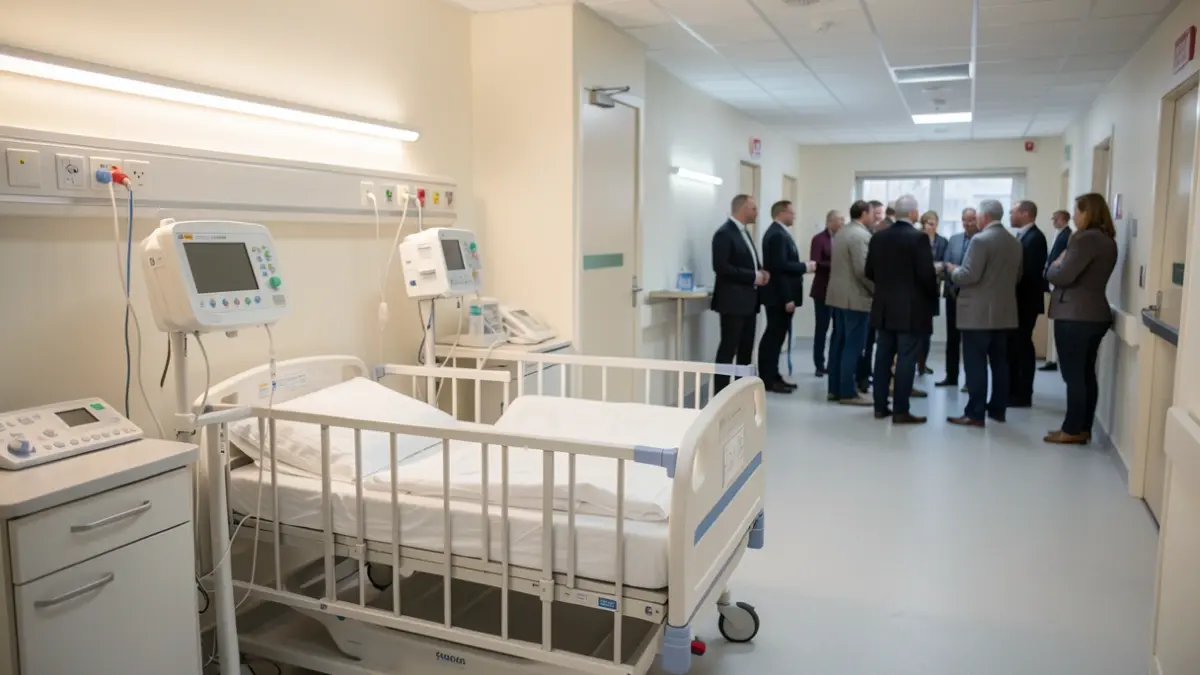
The Care Quality Commission (CQC) has reported significant progress in maternity care across Derby and Burton, noting that families feel more involved and supported. Following a three-day inspection in June 2026, the CQC has published findings that reflect 'sustained improvements', leading to upgraded ratings for both Royal Derby Hospital (RDH) and Queen's Hospital Burton (QHB).
Maternity care at Royal Derby Hospital is now rated as 'Good', a notable increase from its previous 'Requires Improvement' rating in December 2024. While Queen's Hospital Burton still requires improvement, it has seen three of the five assessed domains achieve a 'Good' rating. This marks the second consecutive inspection where the CQC has improved the ratings for the Trust's maternity services.
These improved ratings are a significant milestone for the Trust, driven by dedicated maternity teams who have implemented substantial changes over the past three years. Investments in the workforce and revised protocols for patient triage, baby monitoring, and obstetric bleed management have contributed to better care, outcomes, and experiences for women, birthing people, and babies.
“"While the improved ratings evidence that we are an improving maternity service, and are focusing on the right things, we know there is still more work to do in all areas, particularly in community care, and at Queen's Hospital Burton, and we will not stop, because every family deserves the very best care now, and in the future."
Sarah Noble, Director of Midwifery, expressed pride in the teams' efforts, stating, "I am proud of our dedicated midwives, doctors and support teams, who are driving our improvement work - and we will continue to listen to families and act on feedback." She emphasised the Trust's commitment to continuous progress in both hospital and community settings.
The CQC reports highlight key improvements since the previous inspection 12 months ago, including safer patient handovers between shifts, enhanced collaboration between medical and midwifery staff, strengthened medical oversight, and improved personalised care plans. Families interviewed during the inspection described their care as 'high-quality and responsive', feeling listened to and involved in decision-making, with patient surveys also indicating improved satisfaction.
“"Personalised care has been a real focus for our teams. What matters to women, matters to us, and by working in partnership with families, and listening to their individual needs, we can tailor our approach to deliver consistent safe care."
The Trust's structured three-year improvement programme has seen clinicians drive up standards, alongside consecutive CQC rating improvements. The Trust has also achieved full compliance with a national maternity safety plan (MIS) and seen a reduction in care concerns relating to harm.
Further improvements include expanding senior doctor capacity with seven additional consultants and five middle grade doctors to enhance access to medical care. The Trust is also transforming antenatal and postnatal care delivery by working with community midwives, health visitors, mental health teams, and community services to provide personalised, wrap-around care. An enhanced focus on community engagement has led to the development of a Maternity and Neonatal Health Inequalities Forum, involving over 180 people from Black, Asian, and other minority ethnic groups to address health inequalities.
The workforce has been strengthened with new midwives, and training compliance for essential skills like newborn basic life support and obstetric emergencies now exceeds the national target of 90%. Midwifery staffing levels are growing, with a downward trend in 'red flag incidents' and no patient safety incidents related to staffing issues in the past two months. The Trust has also seen fewer cases requiring external review through the national Maternity and Newborn Safety Investigations (MNSI) framework, indicating learning from past cases and adherence to best practice.
Investment in maternity spaces and equipment continues, with critical care support and neonatal transitional care beds now available in both maternity units. A new maternity triage unit is set to open at QHB next year. The Trust has invested £1.6m in BadgerNet, an electronic maternity record system designed to improve documentation and accessibility of information for all relevant professionals.
Megan Lewis and her partner Tom Ford shared their positive experience after welcoming baby Rowena via emergency caesarean section. Megan, who is neurodivergent, described feeling safe, listened to, and well looked after throughout her high-risk pregnancy and birth experience.
The Trust encourages parents and families with questions to contact their Community Midwife or the Patient Advice and Liaison Service (PALS) at: Telephone: 01332 785 156; Text: 07799 337 500; Email: uhdb.contactpalsderby@nhs.net. Local Maternity & Neonatal Voice Partnerships (MVNP) can also be reached at ddicb.derbyshirematernityvoices@nhs.net (Derbyshire) or sasot.mnvp@nhs.net (Staffordshire).