
The laboratory's work provides evidence-based advice for highway maintenance and construction. By accurately identifying problems and checking workmanship, the council can make better-informed decisions about necessary work and appropriate treatments.
Cllr David East, executive member for highways, stated: “Looking after Lincolnshire’s roads is a significant responsibility, and residents rightly expect us to make careful use of public money. Lincs Laboratory’s specialist work helps us understand what roads need, check the quality of new construction and make decisions based on evidence rather than guesswork. This can help us target maintenance more effectively, avoid unnecessary spending and get better long-term value from the investment we make in the county’s highways.”
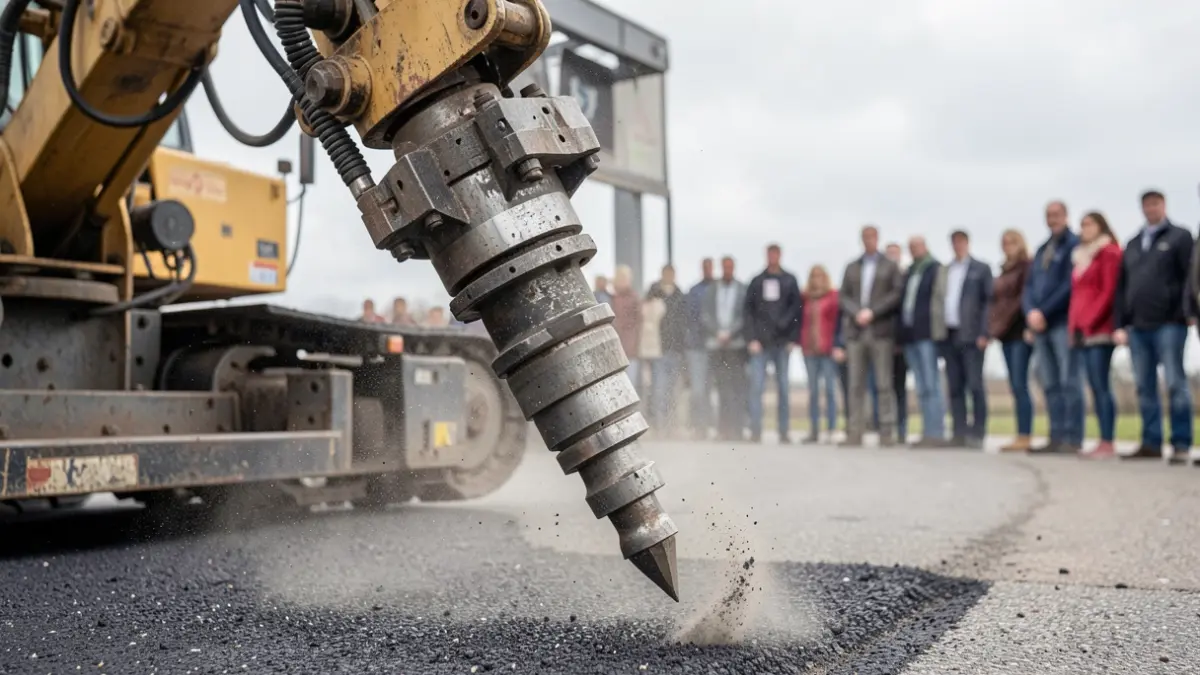
The laboratory uses three towable coring rigs and two smaller portable versions. These rigs employ hydraulically powered, diamond-tipped drilling equipment to extract cylindrical samples of asphalt or concrete. Each operation requires two people to operate the rig, position it safely, measure and package the sample, and record its exact location.
A typical sample from a newly constructed road measures 150mm in diameter and weighs around 7.5kg. The equipment can extract cores up to 450mm long in a single operation, with extensions for deeper samples.
Chris Neal, laboratory services manager, explained: “A core gives us a direct look at the materials beneath the road surface. We can establish how thick the different layers are, assess their condition and, where necessary, test their composition and physical properties. That information is particularly valuable when investigating an existing road. Surface defects don’t always tell the whole story, and understanding what is happening underneath helps engineers identify the likely cause of a problem and design a more appropriate, durable repair.”
Coring supports investigations of existing roads and quality checks on new construction. For older roads, samples help identify road tar, a recognised carcinogen, allowing for necessary safety precautions. For new roads and maintenance schemes, cores verify correct materials, thickness, and compaction. Further laboratory testing assesses strength, stiffness, and composition.
Without this testing, engineers would rely more on survey information and visible defects, potentially misdiagnosing problems and leading to premature deterioration of repairs. "For new construction, coring is a key way of verifying what has actually been laid," added Chris Neal. "We can measure the layer thickness and density, and carry out further tests to investigate material performance and composition."
The laboratory also uses equipment like the Rolling Straight Edge and Texture Meter to assess road smoothness and surface texture, contributing to ride quality, braking, and road noise characteristics. "All of this allows us to play an important role in independently checking the quality of works carried out by contractors on behalf of the county council. By scrutinising materials, workmanship and compliance with specifications, we're able to hold contractors accountable and ensure the work residents are paying for meets the standards we expect." If issues are identified, contractors must rectify them at their own cost, protecting taxpayers and ensuring lasting value.
For more information about Lincs Laboratory, visit www.lincolnshire.gov.uk/lincslab.