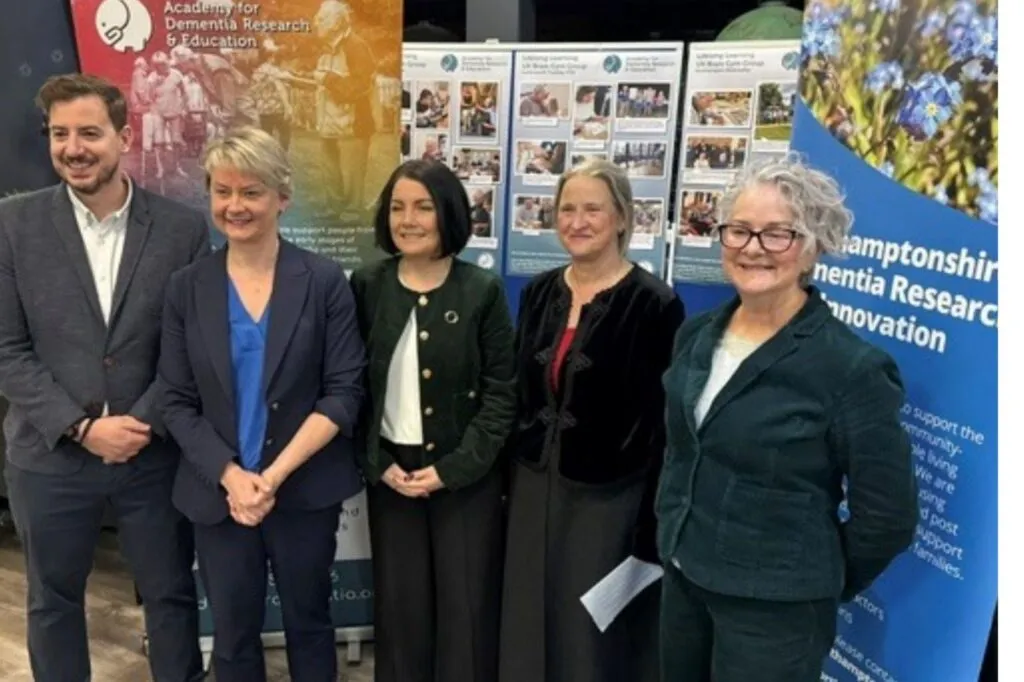
Professor Jackie Parkes and Dr Natasha Bayes from the University of Northampton's Northamptonshire Dementia Research and Innovation Centre (NDRIC) have welcomed the government's £48 million investment in dementia research through the BARBARA Alliance. However, they argue that the full potential of this funding will only be realised if it also supports the community-based organisations that build trust and encourage wider participation.
The BARBARA Alliance aims to accelerate dementia research by linking health data, research, and clinical-trial capabilities, with the goal of increasing trial participation and speeding up the delivery of new treatments to patients. Dementia is described as one of the UK's greatest health challenges, affecting nearly one million people.
The researchers emphasise that universities are uniquely positioned to address this challenge through their teaching, research, and civic engagement. They suggest that the new investment provides an opportunity to rethink how research is conducted, who shapes it, and who benefits. While national data infrastructure is important, successful participation also relies on trusted local relationships.
Institutions like the University of Northampton demonstrate how community-connected universities can translate academic expertise into tangible social impact by working with public services and voluntary organisations. At NDRIC, the principle is that people living with dementia should be active partners in research that affects them, their carers, and loved ones.
Examples of this approach include the Orchard Project in Corby, which developed a community-based support system for dementia, and the recently launched Northampton Brain Health and Dementia Coproduction Forum. Research indicates that while national programmes are crucial, innovation often occurs on a smaller scale within communities, with local partnerships testing new approaches and understanding diverse needs.
As the new investment is implemented, policymakers are urged to consider not only the amount of funding but also how opportunities to participate in research are distributed. Funding models should recognise the value of universities and local partnerships in widening participation, reaching underserved groups, and translating evidence into everyday improvements. Dedicated support for community infrastructure, including long-term relationships with carers and voluntary organisations, is also deemed essential.
This comprehensive approach should include prevention, early interventions, new diagnostics, and treatments, ensuring that national investment supports the entire pathway from discovery to community-level improvements. Universities play a dual role in advancing research and preparing the health and care workforce for future challenges, fostering skills in prevention, early intervention, and partnership working.