
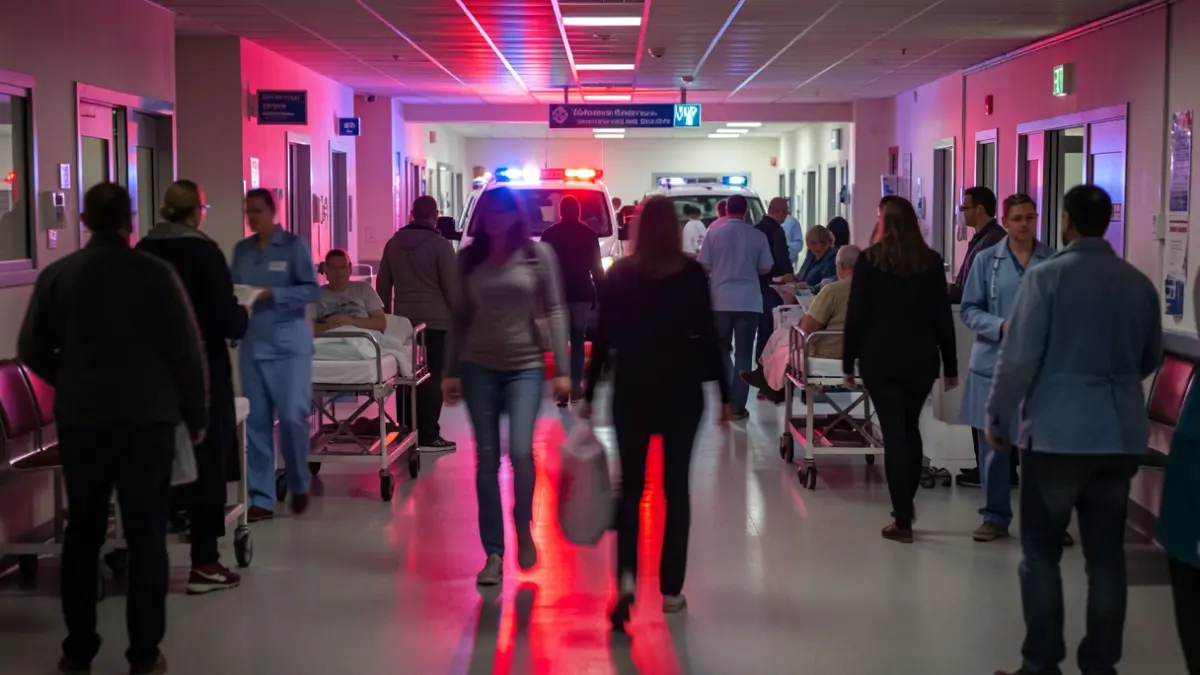
The Trust is currently experiencing exceptionally high demand, particularly in its A&E department, leading to considerable and lengthy waits for patients. In the last two weeks, the hospitals have seen three of the highest attendances on record, with 2,000 more A&E attendances in September 2026 compared to September 2025. This ongoing impact has placed significant strain on resources.
Compounding the issue, there has been a high number of cardiology patients requiring intensive, prolonged care, diverting resources from other areas. Currently, over 200 patients are in the A&E department, with more than 100 waiting to be seen – a situation described as "unacceptable" and increasing the risk of harm. Furthermore, over 200 patients within the hospitals are medically fit for discharge but remain, occupying space equivalent to almost eight wards.
“"We recognise that significant waits to be seen and corridor care is not the way our staff want to work or our patients want to be seen, and for that we are very sorry. Please be reassured that we are doing all we can and hope that the actions we are taking will improve the situation as soon as possible."
Tracy Pilcher, Chief Nurse at NUH, stated, “We are seeing significant pressures across our hospitals and in particular in our A&E department, where we have more than 100 patients waiting to be seen and have seen the highest attendances on record. Not just once, but three times in two weeks.” She added that staff have been working hard to mitigate pressures and focus on patient safety, but the situation remains "incredibly difficult".
To address the pressures, the Trust is increasing capacity, asking colleagues to work additional shifts, and collaborating with system partners to improve patient flow. They are also urging families to collect relatives who are ready for discharge as soon as possible to free up beds. The public is advised to call 999 or attend A&E only for serious accidents and life-threatening emergencies, with NHS 111 online or by phone available for non-life-threatening conditions. Urgent Treatment Centres and pharmacies are also highlighted as alternatives for less severe ailments.